
Is there such a thing as a human-scale city? Throughout human history, our communities have grown into larger and larger societies, and our settlements have grown into cities of increasing scale as we move closer and closer together. And yet, we feel lonelier than ever. We feel lonely to the point where it has become a public health problem, even greater so than obesity, according to scientists1.
So how do we prevent the loneliness epidemic?
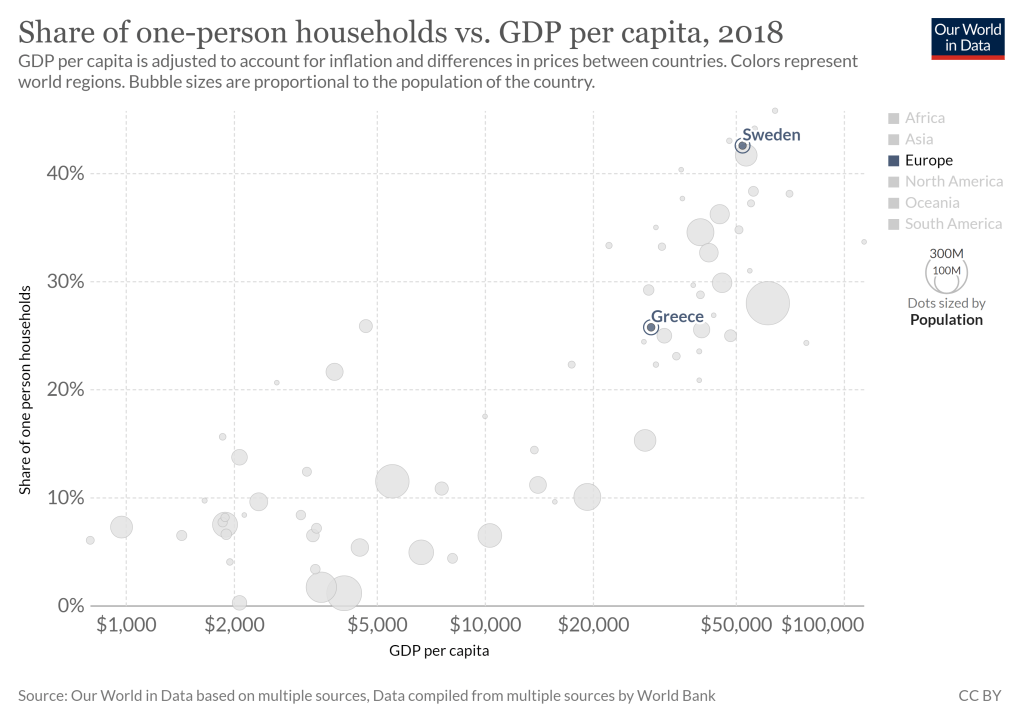
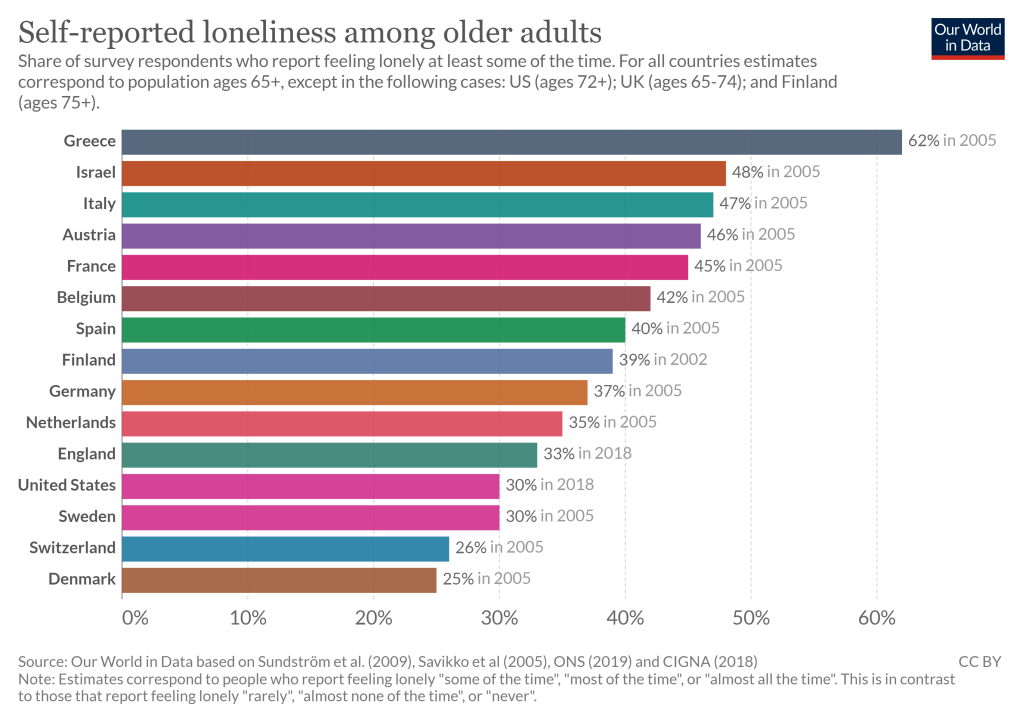
A popular answer seems to be “push more people together”, as if building cities the same way we always have could both be the problem and solution at the same time. People argue that the economic progress of the individualist democracy and welfare safety nets, which enabled people to live alone, goes against tribal history. In the past, people stayed together and helped each other because they had to, and the physical isolation of modern society has made us lonely. They list Sweden as a detrimental example of individualism = loneliness. But, this argument seems to disregard that there’s no proven causal relation, and that countries like Greece, where living alone is less common, has higher levels of self-reported loneliness. Individualism doesn’t disconnect with society, it ensures the freedom to choose your social network and form healthy relationships.
Researchers at Karolinska Institute confirm the detrimental health impacts loneliness can have, but also highlight the issue that misinterpretation of how to define loneliness has put a focus on quantity over quality in various kinds of studies and policy and has not yielded fruitful data. Yes, the number of single-person households are increasing, and yes, loneliness is becoming a bigger problem, but individualism, economic factors, or the sheer number of human relationships one maintains might not be the culprits. Instead, they put forward the vision to battle the hazards of loneliness through the “EASE-method”, which emphasizes the need to establish contexts where people are able to meet like-minded people one is able to relate to, through for example common interests, and invest in few, personal, qualitative relationships. And it makes sense, in order to feel connected to other people, one must be able to relate to them. [referens: https://ki.se/en/research/loneliness-a-danger-to-our-health%5D
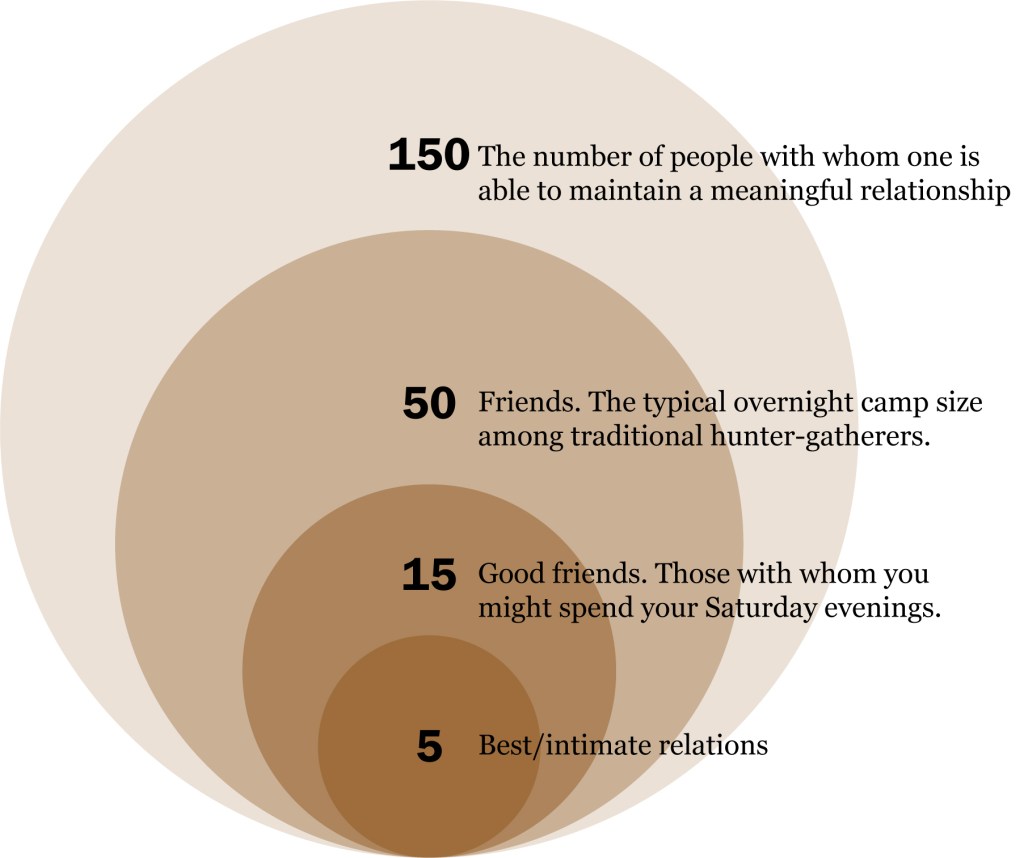
But how do we create contexts where deep social connection is able to flourish? The contemporary model of social interaction is formed through Social Media. In digital space, we are not only expected to keep engaged in hundreds of different peoples’ lives every day, we are bombarded with information to such an extent that maintaining close, meaningful relationships becomes harder. According to anthropologist Robin Dunbar, we all have a finite cognitive limit of meaningful relationships we can maintain and process, which has popularly become called “Dunbar’s Number”. He suggests this limit to be 150 people, broken down into different scales of closeness. If one wants to have quality relationships, perhaps there is a need to look beyond the white noise of digital media, and focus on forming quality space in physical proximity. But, as we are lonelier than ever and living in bigger cities than ever, if there isn’t a human-scale connection between the self and the outside, how can we ever imagine such a quality environment?
[gör egna diagram av dessa senare så att du slipper referera till andra]
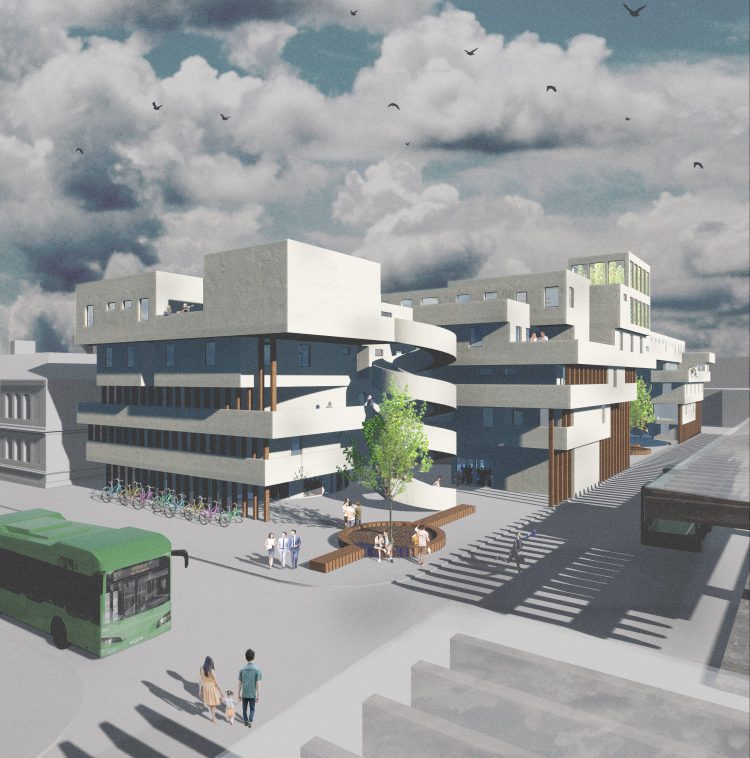
This project investigates how the immediate city block can work as a bridge between the scale of the human, and the scale of the city, to create a sense of connection and community. Based on Dunbars research of meaningful relationships on different scales, the project investigates what meetings and interactions we can promote when the relationship between the private sphere and the communal sphere is reconsidered.
This is done through the formation of community-based living around common interests as opposed to the traditional economic determinant for demographic movement.
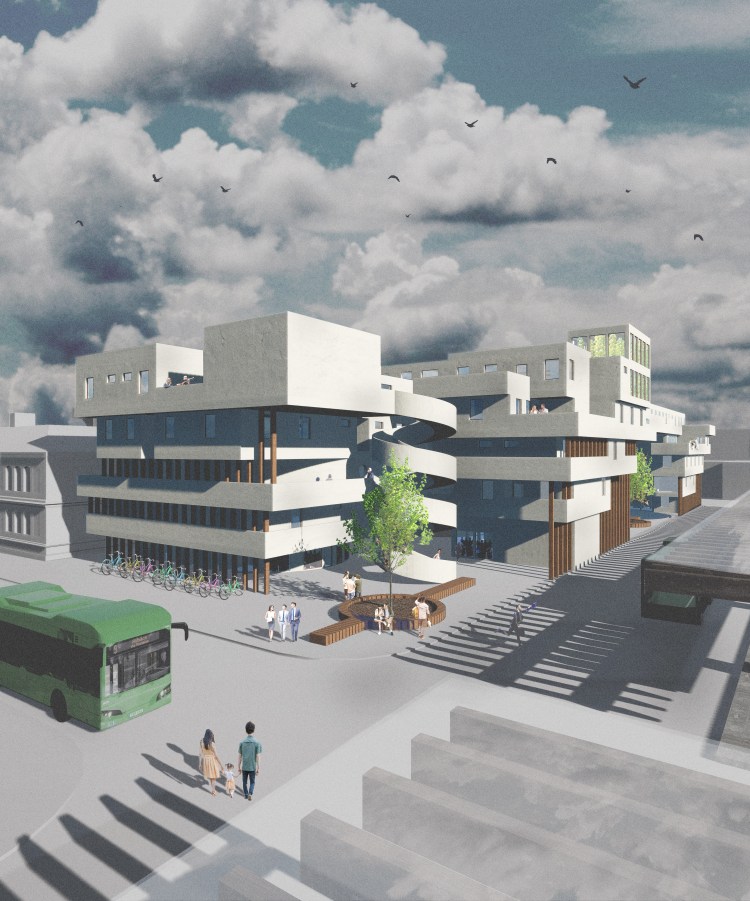
Disclaimer: As this project was developed in academia, economic factors and a broken housing market naturally became established as the culprits for the entire loneliness epidemic, even though communities have a tendency to form even in economically segregated contexts and thus would make economy a non-deciding factor in terms of increasing loneliness. This is important to be aware of.
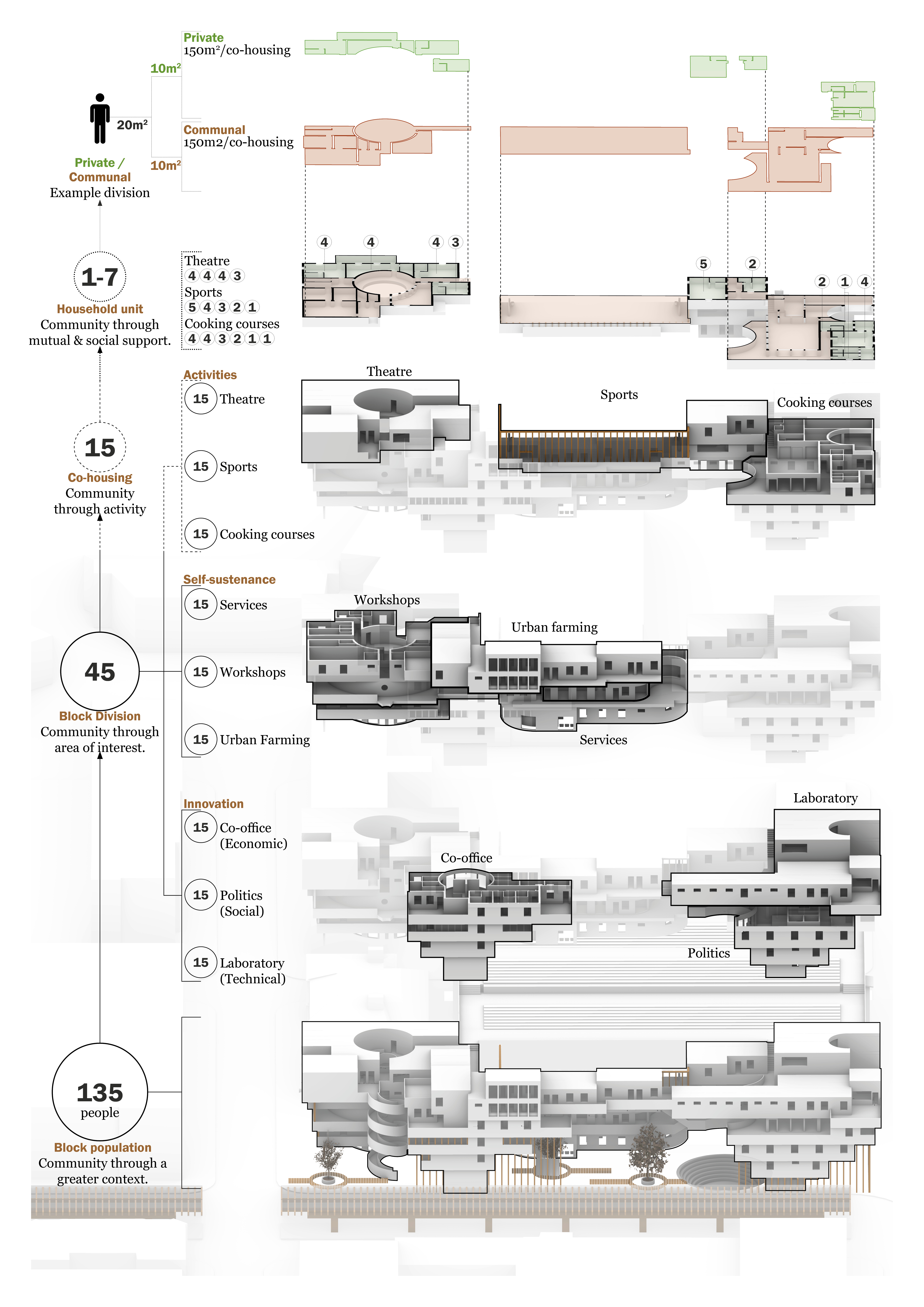
The Block City project is a mixed-housing test-block where groups of people live and interact together in different scales, not through economic means but instead through areas of interest. In the block scale, 135 people are gathered to live in this test-block through the interest of belonging to a bigger context than traditional living. The block is divided into 3 divisions of interest themes within which they all live and work; Innovation, Self-sustenance and Social activities, formed with the intention to reflect what is found inside a city. All divisions are built up of co-housing units based on different activities within the theme, which form the communal networks where people with the same interests can learn from each other and grow together. These co-housings are formed from different sized core-units of ones support network. These are proportional to the households sizes in Sweden overall, based on data from SCB, reflecting the Swedish demographic structure, and distributed according to programmatic benefit. For example, services and small workshops have more single-household units to offer a wider variety of services, the sports-housing have larger sized units to reflect team constellations, and so forth.
Since the project is an experiment of the reevaluation of the private and public, the total area is calculated so that one person gets 20 m2, similar to a students housing. 10 m2 is distributed to the private sphere and 10 m2 to the communal sphere.
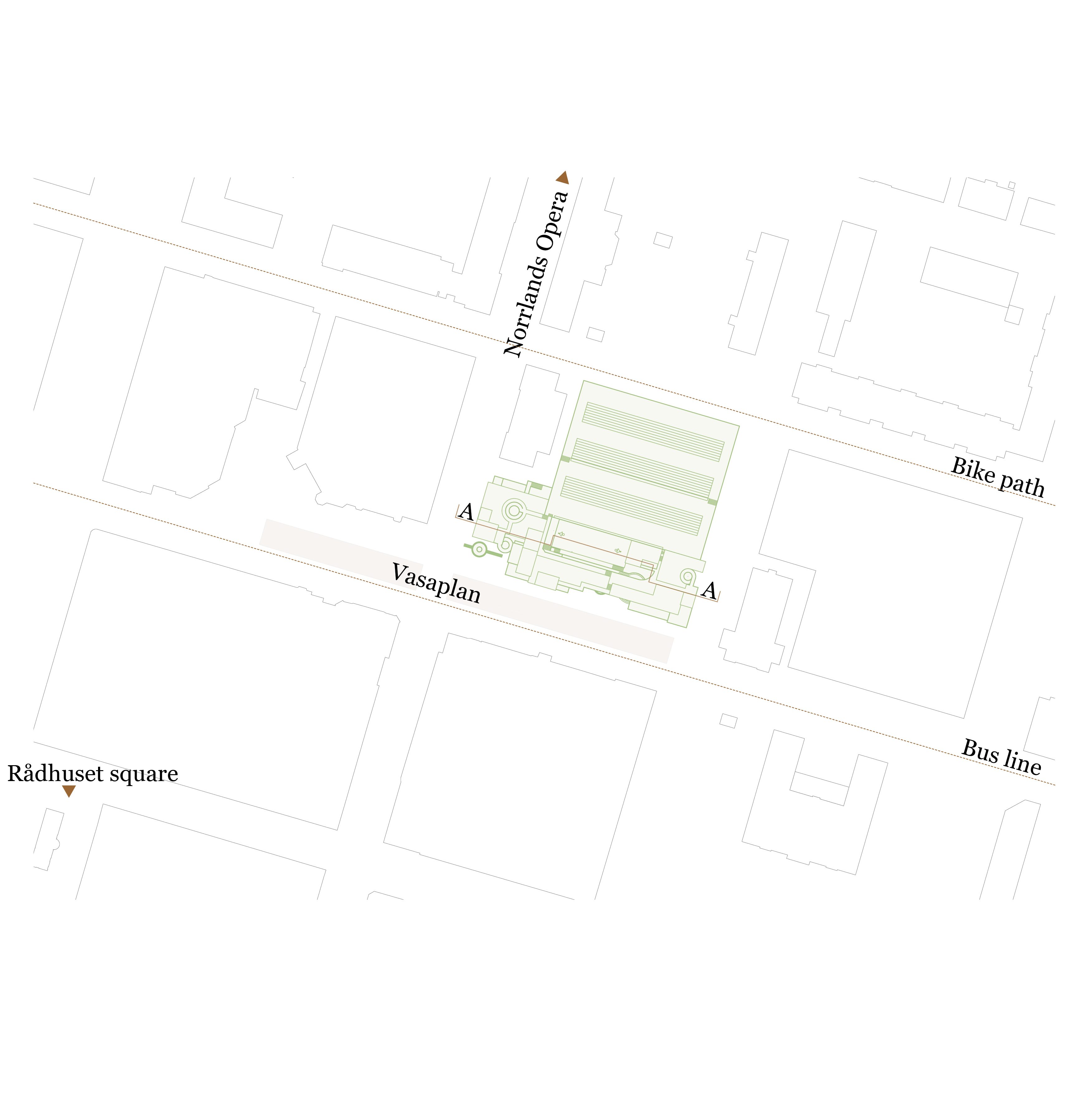
The test-block is situated in the city of Umeå, a city growing rapidly without having met the challenges of the dense megacity yet. As the project is not about social revitalization but rather about building a human-scale city, Umeå offers the needed “clean slate” for accurate evaluation.
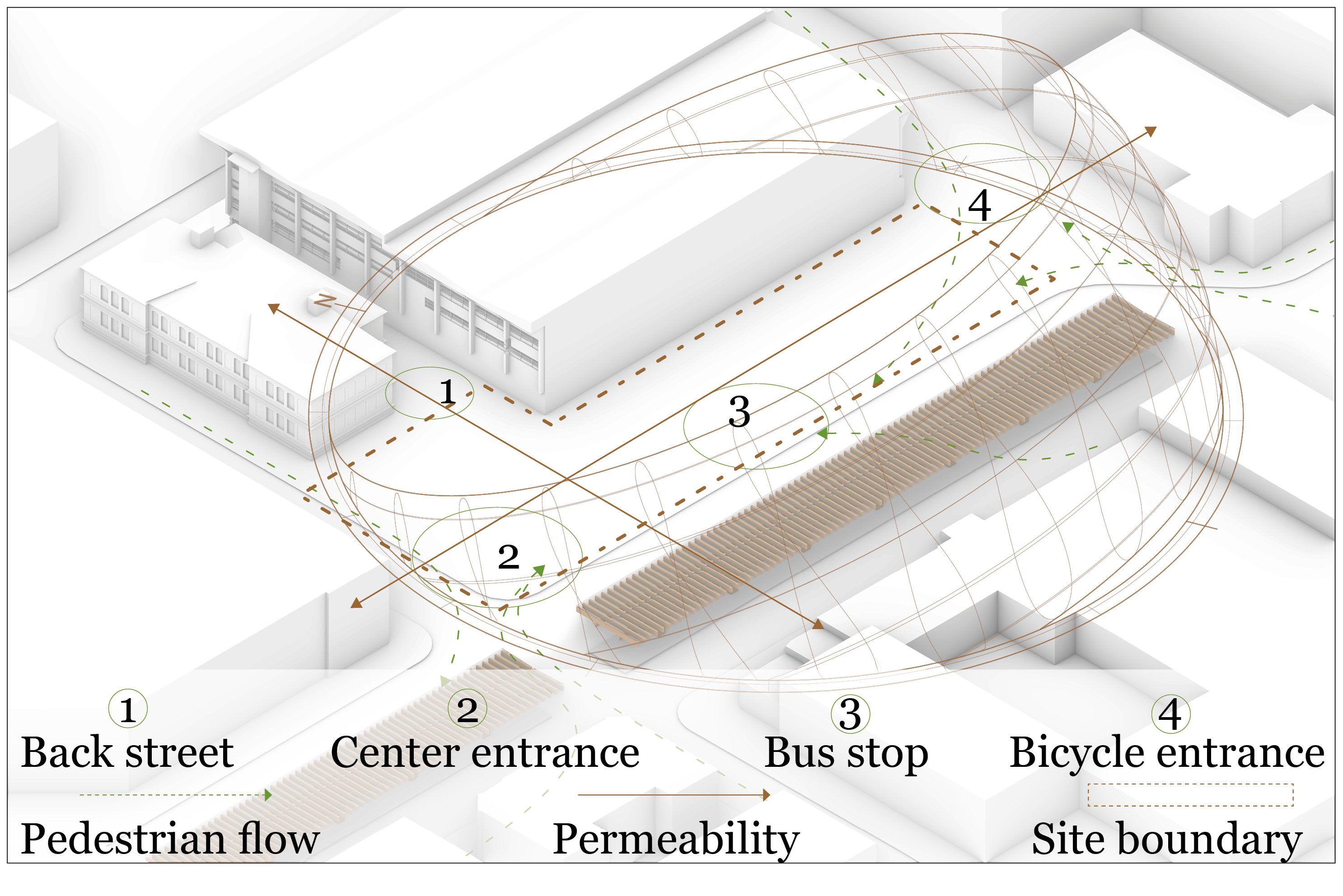
The design has been based on the sites conditions. It is a linear plot in the center of town with a strong connection to the Vasaplan bus-station. The site connects to the center in the west and to a bicycle path in the east.
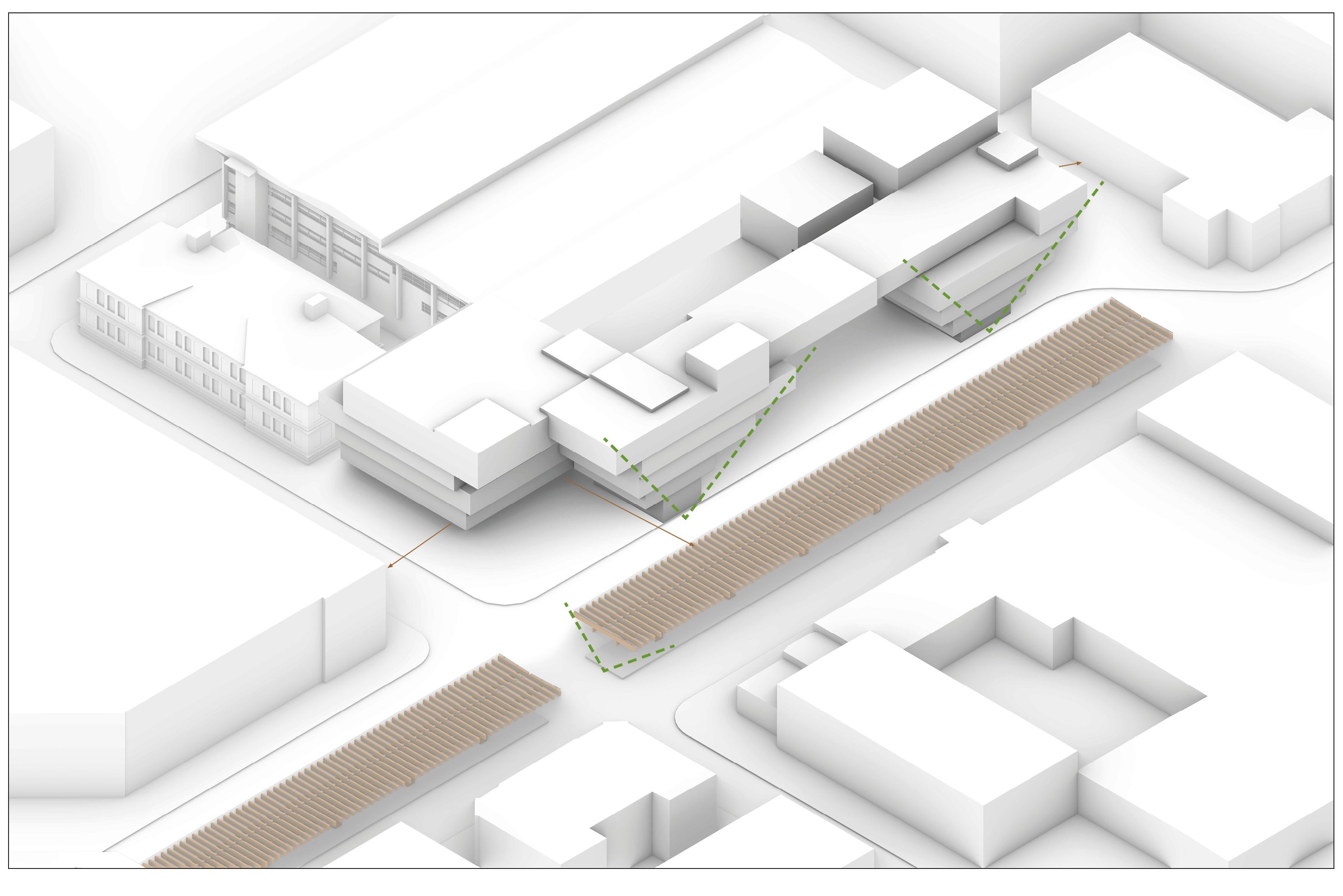
To increase the permeability, maintaining public openness and thus the idea of the city within a block, the ground floor has been given the smallest footprint. Through a cantilevering principle, the footprint increases vertically. This creates a successive stacking of blocks which relates to the stacking principle of the wooden structure as the neighboring bus stop.

The blocks have been given dynamic disruptive moments and variations through circular and rounded voids and volumes, which help to create areas of circulation and meeting spaces.
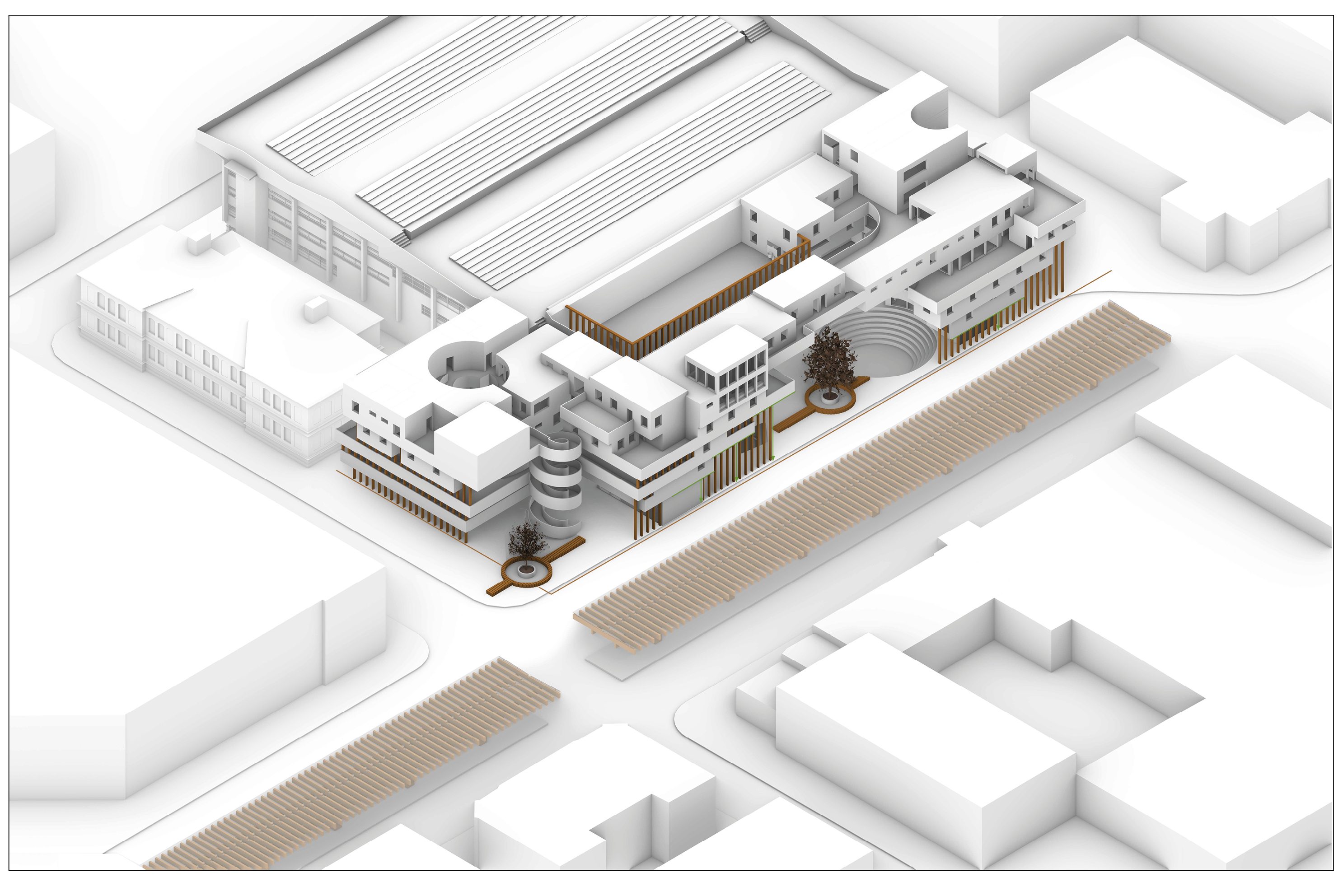
The irregular volumes have then been brought together through pillars of dark oak that visually unifies the design, supports the cantilevering blocks and strengthens the relation to the already public Vasaplan in its ambition to be publicly welcoming.
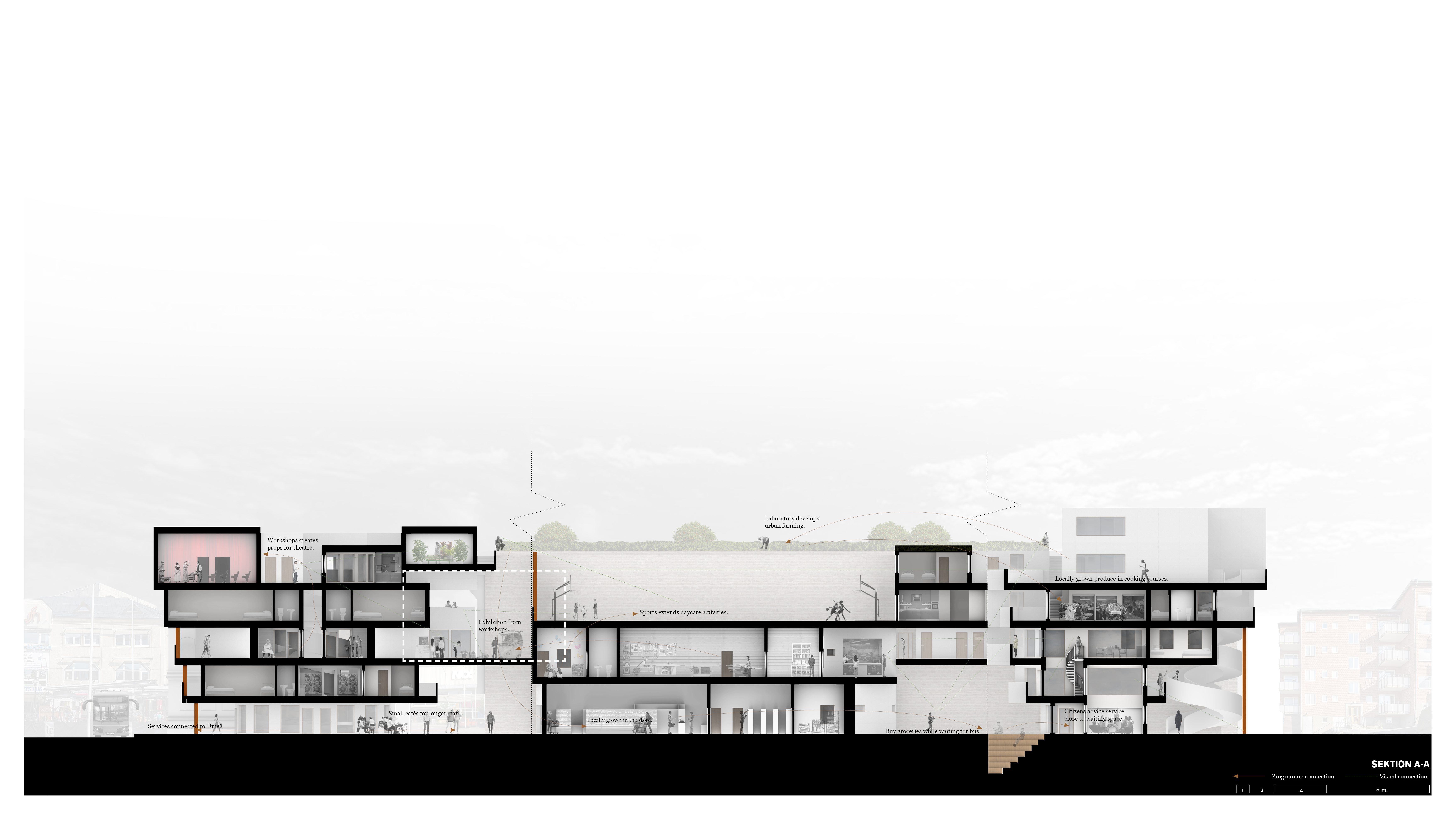
The different programmes have been evaluated based on their needs for privacy versus public availability. Through relational matrices, the programmes were placed in relation to each other for potential synergy effects. Workshops have been placed close to the theatres for the creation of props, laboratories, urban farming, and cooking courses have been placed close to each other to support each other’s activities.
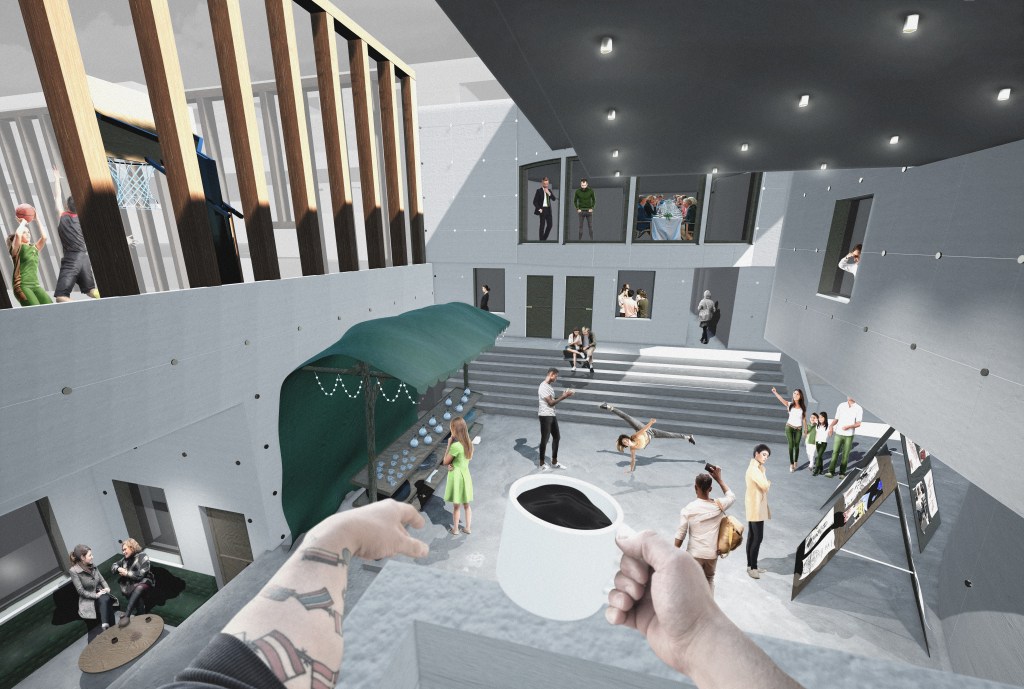
Block City creates an exploratory architecture where the public and the private intermingle. It reflects the experience of walking through a city, not knowing what to expect around the corner, but it’s not a city, it’s not a house, it’s something in between. It is a proposition of how the built space can facilitate quality spaces for people to form relationships and prevent the loneliness epidemic, acting as a bridge between the city and the human scale.
 vonka
vonka 